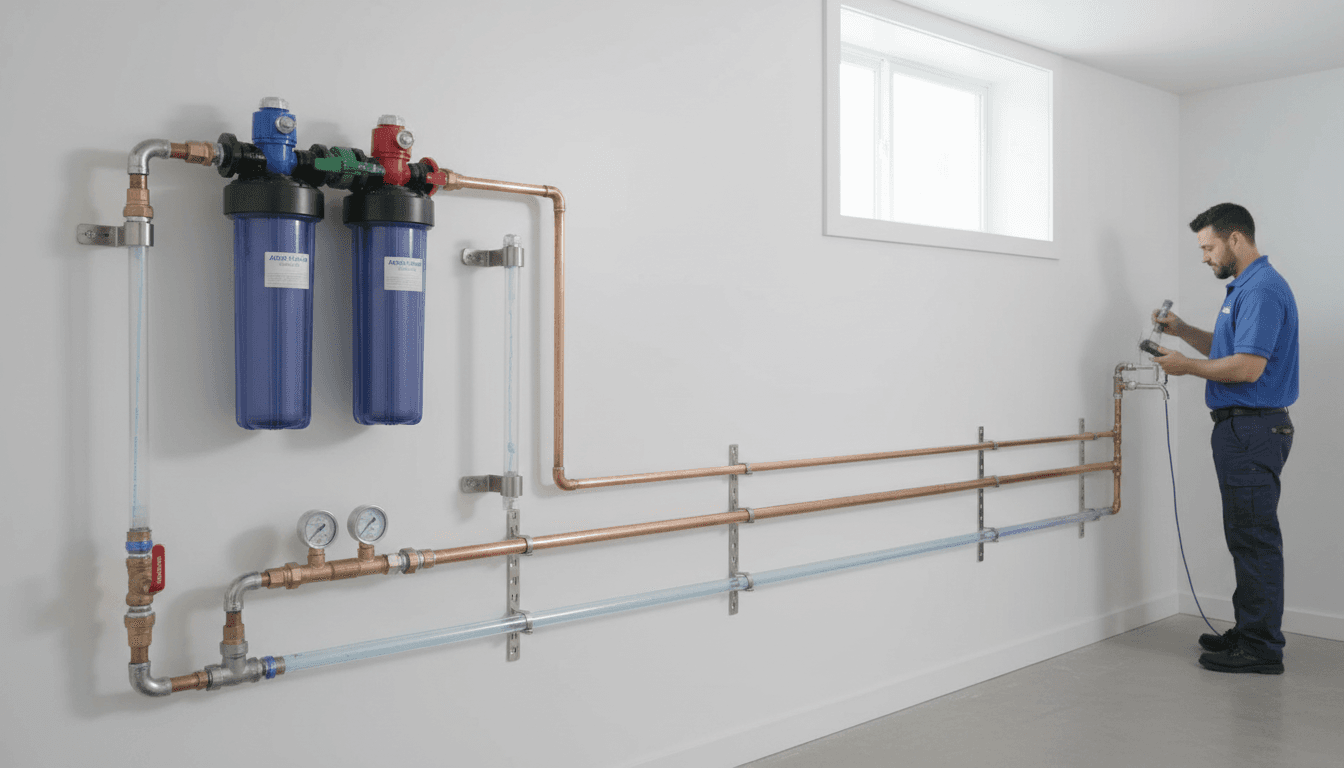
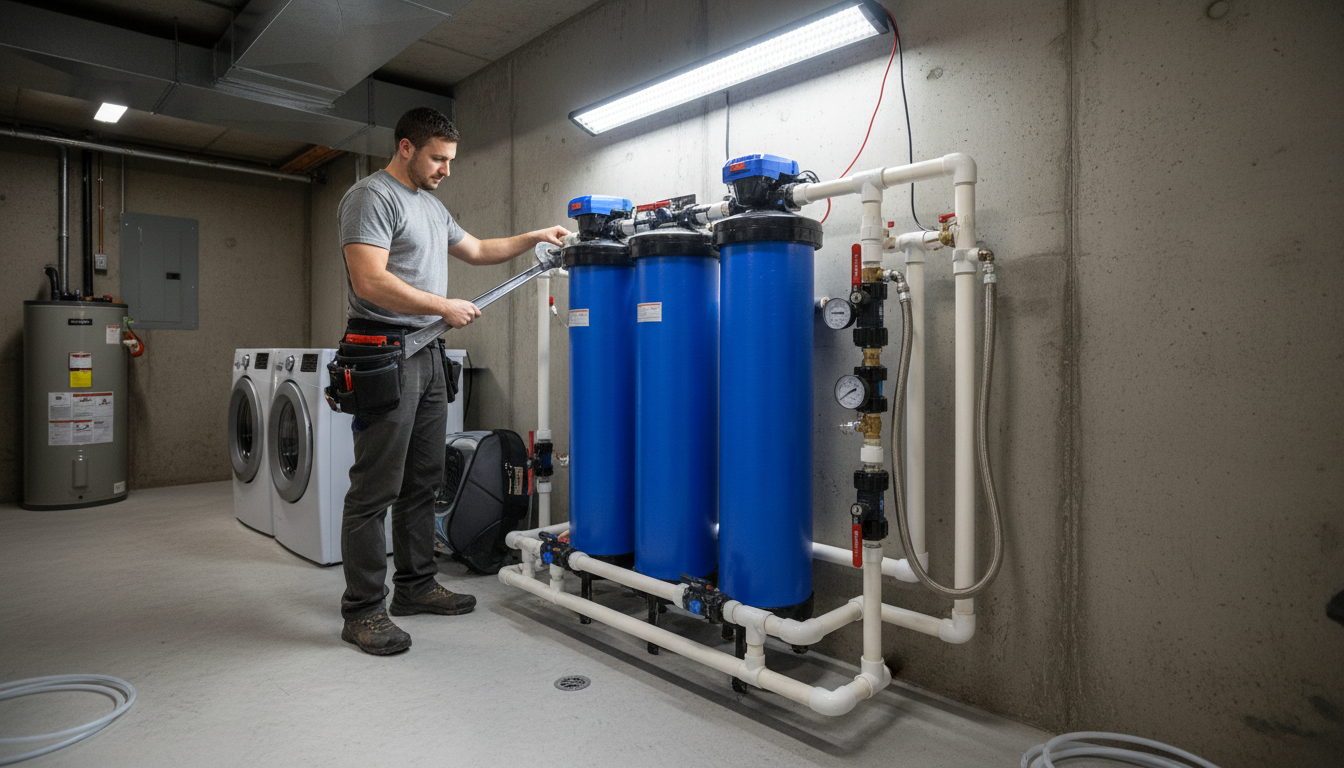
Reverse osmosis systems specialize in removing a broad range of contaminants like PFAS and heavy metals for high-purity drinking water, while whole home systems treat water at every tap to protect plumbing and skin from sediment. When deciding between reverse osmosis vs whole home water filtration, Philadelphia residents must weigh the need for bottled-quality drinking water against the benefit of filtered water for showers and appliances.
Living in Philadelphia often means contending with aging infrastructure and water that feels as hard as the historic cobblestones outside. For the discerning homeowner, this is more than a minor inconvenience; it is a direct threat to the longevity of bespoke marble countertops and premium polished nickel fixtures. Selecting an inadequate filtration method can lead to persistent mineral buildup or chemical residue that quietly compromises your renovation investment. In this guide, we examine the critical differences between whole-home point of entry systems and high-precision reverse osmosis units. You will learn how each technology functions within a luxury property, how they protect your high-end finishes, and which configuration provides the specific level of purity your Philadelphia household deserves.
The Current State of Philadelphia Tap Water
Philadelphia's municipal water system draws from the Delaware and Schuylkill Rivers, treating approximately 250 million gallons daily to meet federal Safe Drinking Water Act standards. Despite compliance, the journey from treatment plant to tap introduces measurable degradation. Total Dissolved Solids (TDS) levels in Philadelphia tap water typically range between 150 and 300 parts per million (ppm) — not unsafe, but noticeably higher than the sub-50 ppm benchmark that defines premium bottled water. Iron concentrations frequently register between 0.3 and 1.0 mg/L, particularly in neighborhoods with older cast-iron distribution mains, contributing to the metallic taste and rust-colored staining familiar to many residents. Chlorine residuals, while necessary for disinfection, persist at 0.5 to 1.5 mg/L at the tap and are the primary source of the distinct chemical odor reported across the city. Perhaps most critically, the Philadelphia Water Department has identified approximately 20,000 active lead service lines still in operation, primarily in pre-1950 housing stock, which pose a leaching risk when water chemistry becomes corrosive.
Beyond taste, more serious concerns like lead from older service lines and the presence of PFAS (per-and polyfluoroalkyl substances) are reality-driven factors for property owners. These regional water quality issues make the choice between reverse osmosis vs whole home water filtration a strategic decision for both health and property preservation. For those investing in high-end kitchen renovations, unfiltered water can lead to mineral buildup on expensive appliances and spotting on custom fixtures. Integrating advanced water filter systems is no longer just an upgrade; it is an essential component of maintaining the longevity of a home’s plumbing and the purity of its drinking water. Understanding these local environmental stressors is the first step in selecting a system that protects your investment and your family.
Understanding Whole-Home Water Filtration: The Point of Entry Solution
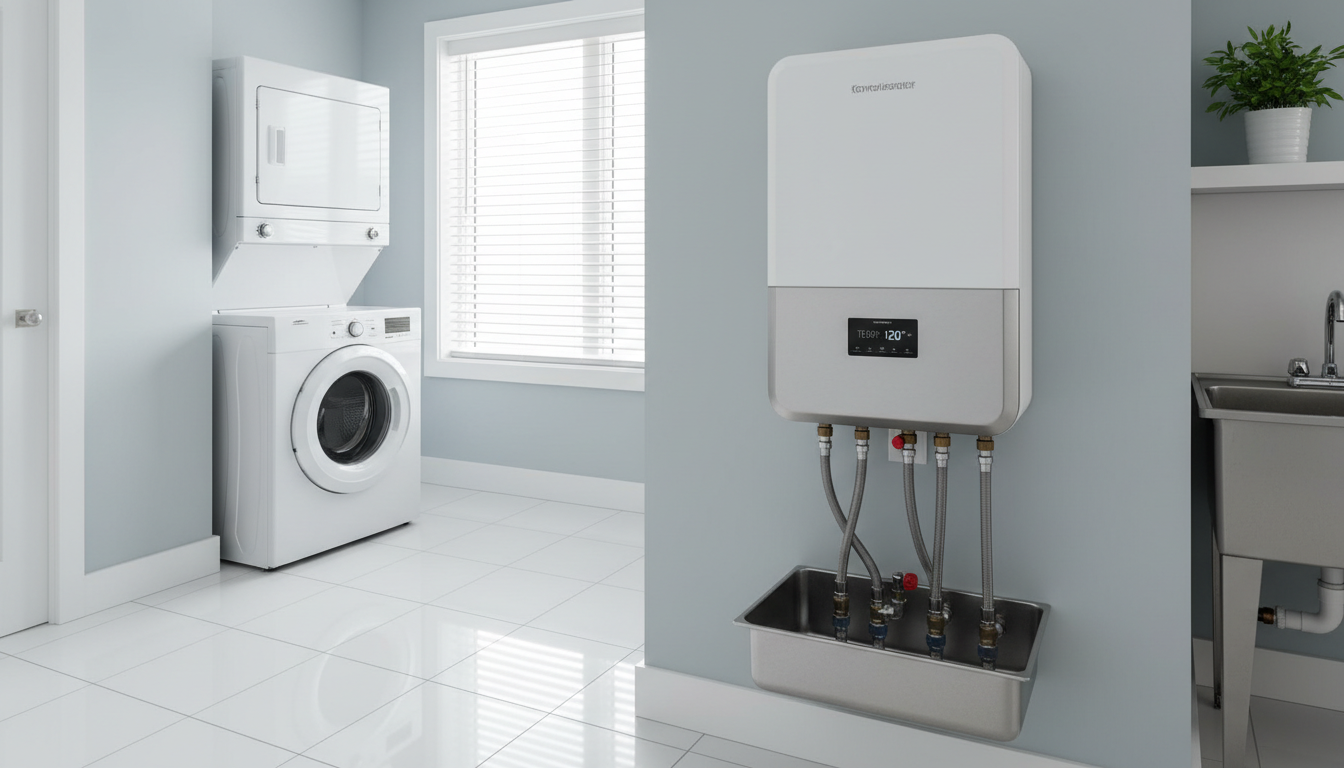
A whole-home system, technically classified as a Point-of-Entry (POE) solution, functions as a comprehensive gatekeeper for your property. Unlike localized filters, this system is installed directly at the main water line where it first enters the building. By intercepting the municipal supply at the source, it ensures that every drop of water flowing through your pipes, whether it is destined for the laundry room or a custom ensuite, has undergone rigorous filtration.
These systems typically deploy three to five distinct stages, each engineered for a specific contaminant profile. A primary sediment pre-filter, rated at 5 to 20 microns, captures suspended solids such as sand, silt, and oxidized iron particulate. This is followed by high-capacity activated carbon blocks — typically coconut-shell granular activated carbon (GAC) or catalytic carbon — which adsorb chlorine, chloramines, volatile organic compounds (VOCs), and disinfection byproducts like trihalomethanes (THMs). Catalytic carbon is particularly effective for chloramine removal, which is relevant given Philadelphia's use of chloramine as a secondary disinfectant. A third stage often incorporates ion-exchange media or a water softener to remove calcium and magnesium ions responsible for hardness, reducing scale deposition on fixtures and inside pipes. For homes with well-documented iron issues, specialized greensand or birm media can oxidize dissolved ferrous iron into filterable ferric hydroxide particles. The local Philadelphia iron content — soluble ferrous iron passing through aging mains — is frequently responsible for the stubborn reddish-orange staining seen on porcelain tubs and grout lines. By removing these elements before they reach your fixtures, a whole-home system acts as a shield for your plumbing infrastructure.
When investing in luxury bathroom remodeling, the longevity of your hardware depends heavily on water quality. Standard tap water can quickly degrade the internal cartridges of premium faucets or clog the delicate nozzles of a luxury rainfall showerhead with mineral deposits. Integrating advanced water filter systems at the point of entry preserves the aesthetic and functional integrity of these high-end finishes. While the debate of reverse osmosis vs whole home water filtration often centers on drinking purity, the POE system is fundamentally about protecting the home’s mechanical systems and surfaces from the corrosive effects of untreated municipal water.
Reverse Osmosis Explained: The Ultimate Point of Use Purity

While whole-home systems manage the water volume required for daily chores, Reverse Osmosis (RO) provides a targeted level of refinement essential for consumption. As a Point-of-Use (POU) system, it is traditionally installed under the kitchen sink or integrated into a custom wet bar to provide high-purity water for drinking and cooking. The core of this technology is a Thin Film Composite (TFC) semi-permeable membrane with pore sizes as small as 0.0001 microns — roughly 500,000 times finer than a human hair and approximately 100 times smaller than the smallest bacteria. For context, a standard whole-house sediment filter captures particles down to 5 microns; the RO membrane operates at a resolution two orders of magnitude finer. Under typical residential line pressure of 40 to 80 psi, water molecules are forced through this microscopic barrier while dissolved salts, heavy metals, and organic compounds are rejected and flushed away. A complete RO system includes multiple pre-treatment stages: a 5-micron sediment pre-filter to protect the membrane from fouling, an activated carbon block to remove chlorine (which degrades TFC membranes), and after the membrane stage, a post-polishing carbon filter for final taste refinement. This multi-barrier design ensures the membrane achieves its rated 95 to 99 percent rejection rate for total dissolved solids, including specific threats such as nitrates, lead, arsenic, hexavalent chromium, and PFAS compounds like PFOA and PFOS.
This process is exceptionally efficient, removing up to 99 percent of total dissolved solids. This includes specific threats such as nitrates, lead, and fluoride, which are frequently a priority for families in the Philadelphia area. In the debate of reverse osmosis vs whole home water filtration, the RO system is the clear winner for chemical purity. It provides a final stage of polishing that ensures your drinking water is free from the residual impurities that might bypass a broader filtration method.
Homeowners occasionally express concern regarding the removal of minerals, specifically asking if high-purity water is hard on the kidneys or whether it leaches minerals from the body. The scientific consensus is clear: the human body derives the vast majority of its essential minerals — calcium, magnesium, potassium — from dietary sources, not from tap water. To put this in perspective, one glass of milk contains approximately 300 mg of calcium; a typical 8-ounce glass of Philadelphia tap water contains roughly 7 to 12 mg. The nutritional contribution of water-borne minerals is negligible. That said, for clients who prefer the taste profile of mineralized water or want alkaline output, we offer a remineralization stage — typically a calcite or Corosex filter cartridge installed after the RO membrane — that reintroduces balanced levels of calcium and magnesium (raising pH to approximately 7.5 to 8.0) without compromising the system's contaminant removal performance. This is a matter of aesthetic preference, not health necessity. Utilizing advanced water filter systems like RO ensures the removal of harmful inorganic compounds while delivering water that is chemically pristine, making it the gold standard for culinary tasks and direct consumption.
Direct Comparison: Reverse Osmosis vs. Whole-Home Water Filtration
Choosing between reverse osmosis vs whole home water filtration requires a strategic look at how you use your property. The primary distinction lies in the scope of protection. A whole-home system treats the entire volume of water entering the residence, whereas a standard reverse osmosis (RO) unit is dedicated to a single point, typically the kitchen faucet or an ice maker.
Feature | Whole-Home Filtration | Reverse Osmosis (RO) |
|---|---|---|
Protection Scope | Every tap, shower, and appliance | Single designated tap |
Installation Area | Utility room or main water line | Under-sink or basement manifold |
Maintenance | Annual filter or media replacement | Multi-stage changes (6–24 months) |
Waste Water | Zero waste during filtration | 3:1 or 4:1 ratio (system dependent) |
Primary Goal | Equipment and fixture longevity | Chemical purity for consumption |
Water efficiency is a critical technical consideration when evaluating reverse osmosis. A standard residential RO system operating at 50 to 60 psi without efficiency enhancements will discharge approximately 3 to 4 gallons of concentrate (brine) for every gallon of permeate produced — a recovery ratio of 20 to 25 percent. This is because the membrane continuously requires a cross-flow of feed water to prevent scaling and fouling on its surface. However, modern high-efficiency configurations substantially improve this ratio. A permeate pump, which is a non-electric hydraulic device driven by the pressure of the brine stream itself, can reduce the waste ratio to approximately 1:1 or better by isolating the membrane from back-pressure in the storage tank. Alternatively, high-recovery membranes with larger surface area and optimized spacer designs can achieve recovery rates exceeding 50 percent. For whole-house scale applications, commercial-grade RO systems with booster pumps and concentrate recirculation loops can reach 75 to 85 percent recovery. We specify these advanced water filter systems based on the specific feed water chemistry and usage demands of each Philadelphia property, ensuring that environmental impact and water utility costs are minimized without sacrificing output quality.
From an investment perspective, the financial profiles differ. Whole-home systems represent a higher upfront capital expenditure due to the complexity of the main-line integration, particularly in luxury bathroom remodeling projects where plumbing manifolds are sophisticated. Conversely, their per-gallon maintenance cost is relatively low. RO systems are more affordable to install initially but require meticulous attention to their specialized filters; the sediment, carbon, and semi-permeable membranes must be replaced on varied schedules to maintain the 99 percent purity rate.
Spatial footprint also plays a role in the decision. A standard whole-home filtration system — typically a set of 10-inch or 20-inch diameter filter housings mounted on a bracket — requires a vertical span of 30 to 50 inches and a depth of 12 to 18 inches near the main water line. Larger carbon backwashing tanks add 9 to 13 inches in diameter and 48 to 54 inches of height. An RO system, by contrast, occupies only a portion of the under-sink cabinet in high-end kitchen renovations: a standard 4-gallon storage tank measures roughly 11 inches in diameter and 15 inches in height, with the membrane housing and filter array fitting within a 16-by-16-inch footprint. Flow rate is another practical consideration: whole-house systems are sized for peak household demand, typically 10 to 20 gallons per minute (GPM), while a point-of-use RO faucet delivers approximately 0.5 to 1.0 GPM — more than adequate for drinking and cooking but unsuitable for filling a bathtub. Understanding these technical and spatial trade-offs ensures the chosen system aligns with both your lifestyle and the architectural constraints of your Philadelphia property.
Protecting Luxury Renovations: Why Water Quality Matters for High End Finishes

Investing in a luxury bathroom remodeling project involves selecting high-performance materials like Carrara marble, unlacquered brass, and heavy-gauge frameless glass. However, these premium finishes are highly susceptible to the chemical and mineral profile of Philadelphia tap water. Chlorine, used by the city for disinfection, acts as a harsh oxidizing agent that can strip the protective sealants from natural stone and accelerate the tarnishing of designer metallic finishes. Over time, this leads to irreversible etching and a loss of the original luster that defines high-end aesthetics.
The conversation regarding reverse osmosis vs whole home water filtration is often framed around drinking preferences, but from a design and maintenance perspective, it is a conversation about surface preservation. Hard water minerals, particularly calcium and magnesium, create stubborn scale on custom glass shower enclosures and internal plumbing components. These deposits are not just unsightly; they are abrasive. Repeatedly scrubbing them away often causes micro-scratches on delicate surfaces, permanently dulling the finish.
In high-end kitchen renovations, a filtration system acts as an essential insurance policy. A whole-home system prevents scale from clogging the intricate sprayers of professional-grade faucets, while advanced water filter systems like RO ensure the water used in steam ovens or premium espresso machines does not leave behind corrosive residue. Protecting these assets from the point of entry is the only way to ensure the long-term integrity of a professional-grade remodel.
Do You Need Reverse Osmosis if You Already Have a Whole House Filter?
A common question arises once a whole-house system is in place: is supplemental filtration at the tap redundant? While a point-of-entry system is highly effective at managing utility water for showering and laundry, it cannot replicate the molecular-level filtration of a semi-permeable membrane. The critical distinction is pore size: a whole-house carbon block filters down to approximately 1 micron, which captures sediment, cysts, and some bacteria, while an RO membrane filters to 0.0001 microns, capable of rejecting dissolved ions, individual molecules, and viral particles. Dissolved contaminants such as lead ions (approximately 0.0002 microns), nitrate molecules, and PFAS compounds pass through carbon media intact but are rejected at the RO membrane. When weighing reverse osmosis vs whole home water filtration, it is helpful to view them as complementary layers of protection rather than competing solutions. The whole-house system handles bulk removal of sediment, chlorine, and hardness; the RO provides a final polishing stage for molecular-level purity at the point of consumption.
We frequently recommend a hybrid approach for discerning Philadelphia homeowners. A whole-house carbon and sediment setup serves as the primary defense, protecting your plumbing and the investments made during a luxury bathroom remodeling project from corrosive chlorine and grit. However, for culinary excellence and pure consumption, adding a dedicated RO unit during high-end kitchen renovations is essential. This secondary layer removes microscopic dissolved solids that pass through standard whole-home media. By integrating these advanced water filter systems together, you ensure that your home’s infrastructure is protected while your drinking water meets the most rigorous purity standards available.
Choosing the Right System for Your Philadelphia Property
Selecting between reverse osmosis vs whole home water filtration begins with a professional, laboratory-grade water analysis. This data-driven approach identifies whether your primary concern is aesthetic, such as chlorine odor, or health-based, like lead or nitrates. In a historic Society Hill townhouse, the focus often shifts toward mitigating lead from aging service lines and fitting advanced water filter systems into tight architectural footprints. We often design custom under-sink cabinetry during high-end kitchen renovations to conceal RO components without sacrificing essential storage.
Conversely, a newer build in the Philadelphia suburbs may prioritize scale prevention to protect a luxury bathroom remodeling project. These properties typically offer dedicated utility rooms where whole-house tanks can be integrated into sleek, built-in storage solutions. Limitless Interiors specializes in the seamless mechanical integration of these systems. We ensure that your water treatment infrastructure remains invisible, hidden behind bespoke panels or within custom utility closets, so that technical reliability never compromises your home’s modern aesthetic. By coordinating the plumbing requirements during the design phase, we provide a turnkey solution that enhances both property value and daily wellness.
Choosing between reverse osmosis and whole-home filtration is ultimately a data-driven decision. The right answer for your property depends on a professional water analysis that quantifies your specific TDS, hardness, iron, chlorine, and potential heavy metal levels — not on a one-size-fits-all recommendation. At Limitless Interiors, we begin every water system consultation with laboratory-grade testing at no cost to you, then design a filtration strategy that integrates seamlessly with your renovation scope. Whether you need whole-home protection for a luxury bathroom remodel, a dedicated under-sink RO for a chef's kitchen, or a layered hybrid approach, our team handles the full installation from main-line integration to final faucet trim. Explore our Water Filters page to learn more, or schedule your complimentary consultation today and we will build a solution engineered specifically for your home.